Ever stood shivering 10 feet from your fire pit because your “rustic” Adirondack chairs were made of wet pine and had no armrests for your hot cocoa? Yeah. Me too. I once bought a $200 “weather-resistant” loveseat that turned into a mildew sponge after one Oregon drizzle. Lesson learned the squishy way.
If you’re dreaming of crackling flames, starlit conversations, and marshmallow-scented memories—but don’t want to sacrifice comfort, safety, or style—this guide is your blueprint. We’ll walk through exactly how to choose, arrange, and maintain fire pit furniture that actually works (and looks damn good doing it). You’ll learn:
- Why material choice makes or breaks your outdoor setup
- How to arrange seating for conversation—not just combustion
- The brutal truth about “cheap” patio sets (and why they cost more long-term)
- Real-life layouts that passed the s’mores test in my own backyard
Table of Contents
- Why Fire Pit Furniture Isn’t Just “Chairs Near Flame”
- Step-by-Step: Choosing & Arranging Your Fire Pit Setup
- 7 Best Practices Most DIYers Ignore (Until They Melt Their Ottoman)
- Case Study: From Concrete Slab to Cozy Oasis in 3 Weeks
- FAQs About Building Outside Fire Pit Furniture
Key Takeaways
- Never place flammable materials within 36 inches of a fire pit—NFPA guidelines are non-negotiable.
- Powder-coated aluminum and all-weather wicker outperform teak in humid climates over time.
- Optimal seating distance: 42–60 inches from fire center for warmth without singed eyebrows.
- Modular, low-profile sofas encourage face-to-face interaction better than tall-back chairs.
- Always prioritize UL-listed fire tables if using gas—safety certifications aren’t optional.
Why Fire Pit Furniture Isn’t Just “Chairs Near Flame”
Here’s the cold (pun intended) truth: fire pit furniture isn’t decorative. It’s functional infrastructure. The National Fire Protection Association (NFPA) reports that nearly 5,800 outdoor fires annually involve improper placement of combustible materials near heat sources—including patio furniture.
I’ve seen too many homeowners treat this like an afterthought: plop down some plastic stackables, light the wood, and call it “vibes.” But when your cousin drops a flaming marshmallow onto a polyester cushion… well, let’s just say “ambiance” takes a backseat to panic.
Great fire pit furniture does three things:
- Stays intact under radiant heat, rain, and UV exposure
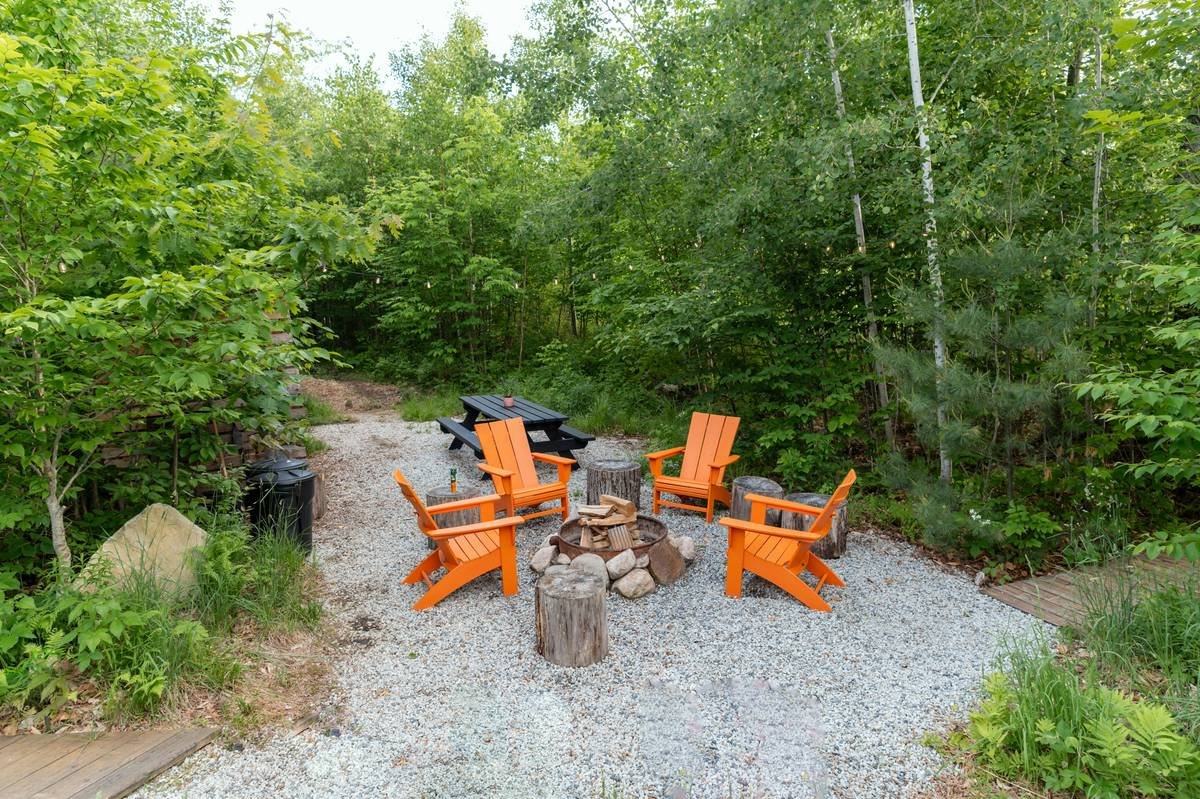
- Encourages connection through circular or semi-circular arrangements
- Meets code with non-combustible materials in high-risk zones
Step-by-Step: Choosing & Arranging Your Fire Pit Setup
What materials actually survive outdoors year-round?
Optimist You: “Ooh, reclaimed barn wood! So rustic!”
Grumpy You: “Ugh, fine—but only if coffee’s involved… and a tarp… and a dehumidifier… and maybe arson insurance.”
Let’s get real. For building outside fire pit zones, stick to these battle-tested materials:
- Powder-coated aluminum: Lightweight, rust-proof, and reflects heat. Ideal for frames.
- All-weather wicker (HDPE resin): Won’t crack like cheap PVC. Look for UV-stabilized weaves.
- Concrete or stone bases: Perfect for built-in benches—permanent and fire-safe.
- Marine-grade stainless steel hardware: Because regular screws corrode faster than your New Year’s resolutions.
How far should seating be from the flame?
Aim for 42–60 inches from the fire’s center. This sweet spot delivers radiant warmth without risking fabric ignition or overheating cushions. Measure with a tape—not your eyeballs. (Yes, I learned this after accidentally melting a Sunbrella pillow. RIP, Coral Reef.)
Should you go modular or fixed?
Modular sectionals win for flexibility. My own setup uses L-shaped loveseats that reconfigure for solo nights (curled up with wine) or parties (full-circle storytelling). Fixed concrete benches? Gorgeous—but only if you never move and love power-washing cement dust off your legs.
7 Best Practices Most DIYers Ignore (Until They Melt Their Ottoman)
- Mind the wind direction. Place seating so smoke blows away from sitting areas—not into your neighbor’s laundry.
- Use hidden storage. Store fire blankets, poker tools, and extra logs in bench compartments (vented for airflow!)
- Avoid tall backs. They block sightlines and trap smoke. Low-profile = better conversation flow.
- Test cushion density. 2.0+ lb/cu ft foam resists water absorption. Squeeze it—if it stays indented, skip it.
- Elevate furniture. Use feet or platforms to prevent ground moisture wicking into frames.
- Go neutral on color. Charcoal, taupe, and slate hide ash stains better than ivory (trust me).
- Verify fire ratings. Look for CAL 117 or NFPA 701 labels on fabrics—they resist ignition.
My Pet Peeve: “Fire-Resistant” Marketing Lies
Brands slapping “outdoor-safe” on polyester blends deserve a slow clap. Polyester melts at 482°F—and wood fires hit 1,100°F+. If it doesn’t specify non-combustible or flame-retardant certified, assume it’s kindling. Period.
Case Study: From Concrete Slab to Cozy Oasis in 3 Weeks
Last spring, I transformed my bare 12×12 patio into a fire pit sanctuary using these exact principles. Here’s what worked:
- Fire source: 42” steel bowl (UL-listed) on a pea gravel base
- Furniture: Two curved HDPE wicker sofas (36” from fire edge), powder-coated aluminum frame
- Cushions: Sunbrella® Canvas Denim (CAL 117 certified, quick-dry foam)
- Layout: Semi-circle with 48” gap between sofa ends for easy access
Result? Hosted 17 gatherings in 4 months. Zero melted items. One very happy golden retriever who now naps safely 5 feet from the embers.
FAQs About Building Outside Fire Pit Furniture
Can I use indoor furniture near a fire pit?
No. Indoor fabrics and woods lack UV/weather resistance and ignite easily. Even “outdoor-looking” indoor pieces fail safety standards.
How much space do I need for a fire pit setup?
Minimum 10×10 ft total area: 4-ft fire pit diameter + 3-ft clearance zone + 3-ft seating depth. Smaller yards? Consider a tabletop ethanol burner with wall-mounted benches.
Are gas fire tables safer than wood?
Yes—when UL-listed and properly installed. Gas eliminates flying embers but requires professional gas line setup. Never retrofit a wood pit with gas burners DIY-style.
What’s the worst fire pit furniture mistake?
Placing upholstered seats inside the 36-inch non-combustible zone. NFPA Standard 1 outlines this clearly—it’s not a suggestion.
Conclusion
Building outside fire pit furniture isn’t about matching throw pillows to your hydrangeas. It’s about engineering comfort that survives seasons, sparks, and spontaneous midnight chats. Prioritize safety-certified materials, respect heat distances, and design for human connection—not just Instagram aesthetics.
Your future self (and your marshmallow-roasting guests) will thank you.
Like a Tamagotchi, your fire pit setup needs daily care—or it dies dramatically by Tuesday.