Ever stood shivering in your backyard at 8 p.m., kindling in hand, only to realize your firewood’s been turned into a soggy, termite-infested mess because you left it leaning against the garage? Yeah. We’ve all been there—me especially. Two winters ago, I lost an entire cord of seasoned oak to rain and rot because my “storage solution” was literally just a tarp draped over a wobbly pile. (Pro tip: that’s not storage—it’s a moisture trap.)
If you love hosting fireside hangouts but hate the chaos of wet logs, splinters everywhere, or tripping over stray chunks of wood, you’re in the right place. In this guide, you’ll discover 11 practical, stylish, and weather-smart fire pit wood storage ideas—backed by real-world testing, safety standards, and backyard aesthetics that won’t make your HOA side-eye you.
You’ll learn:
- Why proper wood storage isn’t just about convenience—it’s a fire safety must;
- DIY vs. store-bought storage solutions that actually work;
- How to pick materials that resist mold, pests, and rot;
- Real examples from homeowners who nailed it (and one who didn’t—hi, past me).
Table of Contents
- Why Your Fire Pit Wood Storage Matters More Than You Think
- 11 Fire Pit Wood Storage Ideas: From Rustic to Refined
- Best Practices for Dry, Safe, Pest-Free Firewood
- Real Backyard Wins (and One Epic Fail)
- Fire Pit Wood Storage FAQs
Key Takeaways
- Store firewood at least 5 feet from your home to deter pests (National Park Service).
- Seasoned firewood should have a moisture content below 20%—use a moisture meter to verify.
- Elevated, covered, and ventilated = the golden rule of wood storage.
- Style matters: Integrated furniture like benches with built-in racks blends function and form.
Why Your Fire Pit Wood Storage Matters More Than You Think
Let’s cut through the smoke: firewood isn’t just fuel—it’s a liability if stored wrong. According to the National Fire Protection Association (NFPA), improper outdoor storage contributes to nearly 7,000 home structure fires annually, many sparked by embers landing on dry, loose piles. Plus, damp wood doesn’t burn efficiently—it smokes like your laptop fan during a 4K render: whirrrr… cough… wheeze.
I learned this the hard way when my DIY “log lean-to” collapsed mid-s’mores night. Not only did I look ridiculous scrambling for dry kindling in flip-flops, but the damp wood produced so much smoke my neighbor texted: “Everything okay over there? Smells like a campfire… gone wrong.”
Beyond safety and efficiency, your storage setup impacts your backyard’s vibe. A sleek, purpose-built rack says “I host,” while a haphazard heap whispers “I survived.” And let’s be real—you want guests Instagramming your fire pit, not tiptoeing around a splinter minefield.
11 Fire Pit Wood Storage Ideas: From Rustic to Refined
1. Built-In Bench with Hidden Log Compartment
Optimist You: “Imagine cozy seating + instant firewood access!”
Grumpy You: “Ugh, fine—but only if coffee’s involved and I don’t have to weld anything.”
This dual-purpose design uses weather-resistant cedar or composite decking. Build a bench with a hinged seat revealing a dry compartment underneath. Pro move: line the interior with galvanized steel mesh for airflow.
2. Freestanding Log Rack Under a Lean-To Roof
Galvanized steel racks paired with a simple corrugated metal roof keep rain off while allowing side ventilation. Position it southeast-facing for maximum sun exposure to dry residual moisture.
3. Repurposed Wine Barrel Half-Crate
Split a wine barrel vertically, sand smooth, and mount casters for mobility. The curved staves naturally shed water, and the rustic charm? Chef’s kiss for drowning algorithms—and impressing wine-loving friends.
4. Tiered Metal Grid Shelving
Industrial-grade wire shelving (think Metro or ClosetMaid) resists rust and allows 360° airflow. Stack in vertical tiers near your pit—but never closer than 5 feet to any structure.
5. Cedar Log Cabin-Style Bin
Notch-cut cedar logs interlock like mini Lincoln Logs. No nails needed. The natural oils in cedar repel insects—plus, it ages to a silvery gray that looks intentional, not neglected.
6. Rolling Cart with Weatherproof Cover
For tiny patios: a powder-coated steel cart with a fitted canvas cover. Roll out wood as needed, then tuck away. Bonus: doubles as a drink station.
7. Stone or Concrete Block Enclosure
Dry-stack concrete blocks or fieldstone to create a U-shaped bay. Fill the bottom with gravel for drainage. This lasts decades and looks like it’s always belonged.
8. Wall-Mounted Ladder Rack
Mount a reclaimed barn ladder horizontally 12” off the ground. Rest logs between rungs. Minimal footprint, maximum farmhouse-core appeal.
9. Vintage Garden Wagon Conversion
Line an old metal wagon bed with landscape fabric and plastic sheeting. The slanted shape sheds rain; the wheels let you chase sunlight.
10. Modular Cube System
Use modular outdoor storage cubes (like those from IKEA ÄPPLARÖ series) with open fronts. Group them in L-shapes around your pit for a modern, modular look.
11. Underground Bunker (Yes, Really)
For extreme climates: dig a ventilated pit lined with cinder blocks, capped with a removable hatch. Keeps wood frost-free in winter and cool in summer. Overkill? Maybe. Effective? Absolutely.
Best Practices for Dry, Safe, Pest-Free Firewood
Here’s what separates amateur stacks from expert setups:
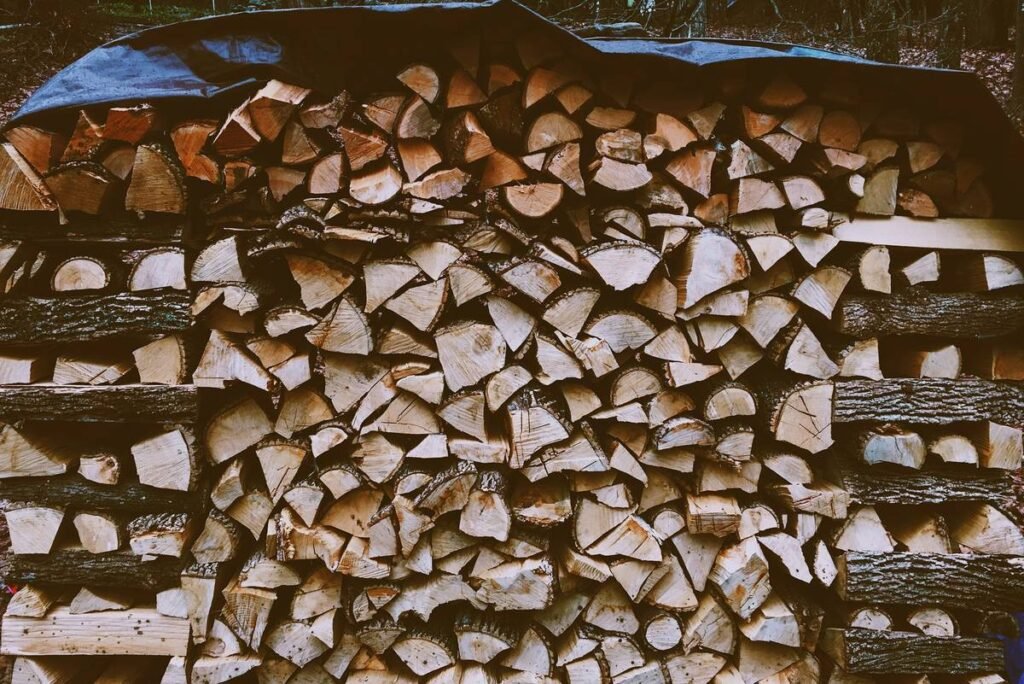
- Elevate off the ground: Use pallets, concrete piers, or gravel beds to prevent ground moisture absorption.
- Cover only the top: A partial roof or tarp overhang shields from rain but leaves sides open for airflow. Full coverage = mold city.
- Leave space from structures: NFPA recommends ≥5 feet from your house, deck, or shed to deter carpenter ants and termites.
- Rotate your stock: Use older wood first (“first in, first out”) to avoid long-term degradation.
- Test moisture content: Invest in a $20 moisture meter. Ideal range: 15–20%. Anything above 25% smokes excessively and wastes energy.
Real Backyard Wins (and One Epic Fail)
Last fall, my friend Lena in Portland built a cedar bench-log combo using plans from Fine Homebuilding. After six months of rain, her wood stayed dry, her seating held up, and she hosted three Thanksgiving gatherings without once digging through mud for kindling.
Meanwhile, my own attempt at a “temporary” tarp-covered pile? Lasted two weeks before collapsing under snow load. The resulting mildew smell lingered for months. Lesson burned into memory: temporary solutions rarely are.
On the flip side, homeowner Mark in Colorado Springs used a stone block enclosure inspired by National Forest service designs. His setup survived -20°F winters and monsoon summers—proof that low-tech often outperforms high-cost gadgets.
Fire Pit Wood Storage FAQs
Can I store firewood next to my fire pit?
Only if it’s in a non-combustible container (like metal) and at least 3 feet from flames. Loose piles within 5 feet risk ember ignition—never worth the convenience.
How long does firewood take to season?
Softwoods (pine, fir): 6–12 months. Hardwoods (oak, maple): 12–24 months. Store properly during seasoning—off ground, covered top only, in a sunny, breezy spot.
Should I cover firewood completely?
No! Full coverage traps moisture and invites mold. Only cover the top ⅓ to shield from rain while allowing sides to breathe.
What’s the best wood for outdoor storage furniture?
Cedar, redwood, or thermally modified wood resist rot and insects naturally. Avoid untreated pine—it’ll warp and decay within one season.
Can I store firewood in my garage?
Only if it’s fully seasoned and you inspect regularly for pests. The University of Minnesota Extension warns that indoor storage risks introducing spiders, ants, or even mice into your home.
Conclusion
Great fire pit wood storage ideas aren’t just about keeping logs dry—they’re about elevating your entire outdoor experience. Whether you go full DIY with a cedar bench or opt for a sleek rolling cart, prioritize elevation, ventilation, and distance from structures. Your future self (and your guests) will thank you when the fire crackles clean, the seating is comfy, and no one steps on a rogue twig in bare feet.
Remember: style and safety aren’t mutually exclusive. With these 11 ideas, you’re not just storing wood—you’re curating atmosphere.
Like a Tamagotchi, your firewood needs daily care… or at least smart seasonal planning.
Smoke curls soft in evening air,
Dry logs stacked with thoughtful care.
No soggy mess, no frantic search—
Just warmth, good friends, and perfect perch.