Ever spent an evening huddled around a flimsy fire bowl on mismatched lawn chairs, only for sparks to singe your favorite patio rug? You’re not alone. Creating a cozy, functional outdoor fire space seems simple—until you realize your “fire pit furniture” doubles as a tripping hazard or melts within weeks. If you’ve dreamed of gathering friends under the stars without sacrificing safety or style, this guide is your blueprint. We’ll walk you through how to build a fire pit area that balances aesthetics, durability, and practicality—so you spend less time troubleshooting and more time roasting marshmallows.
Table of Contents
- Why Fire Pit Furniture Matters
- Step-by-Step Guide to Build a Fire Pit Area
- Best Practices for Durable Outdoor Seating
- Real-World Examples of Successful Setups
- Frequently Asked Questions
Key Takeaways
- Material choice (e.g., powder-coated steel, teak) drastically impacts longevity near open flame.
- Proper clearance—36+ inches from flame to seating—is non-negotiable for safety.
- Modular, low-profile furniture enhances both comfort and conversation flow.
- Storage solutions prevent weather damage during off-seasons.
- Avoid cheap resin wicker—it degrades fast under heat and UV exposure.
Why Fire Pit Furniture Matters
Most homeowners focus on the fire feature itself but neglect the surrounding furniture—only to regret it when plastic chairs warp or cushions ignite. According to the U.S. Fire Administration, over 5,000 residential outdoor fires annually stem from improper placement of combustible materials near fire pits. That’s why choosing the right setup isn’t just about looks; it’s a safety imperative. I learned this the hard way: my first attempt used repurposed indoor ottomans with polyester fabric. One gusty night later, I was dousing smoldering foam with a garden hose—and rethinking everything.
Step-by-Step Guide to Build a Fire Pit Area
1. Define Your Zone
Mark a 10–12 ft diameter circle on level ground. Ensure it’s at least 10 feet from structures, trees, and overhangs per NFPA guidelines (NFPA 1: Fire Code).
2. Choose Non-Combustible Materials
Select furniture frames made of wrought iron, aluminum, or stainless steel. Avoid wood unless it’s dense hardwood like ipe—and even then, maintain ample clearance.
3. Prioritize Low Seating
Opt for chairs or benches 14–18 inches high. Higher seats force awkward neck craning; lower profiles invite relaxed lounging.
4. Integrate Storage
Use ottomans with hidden compartments or side tables with lift-top lids to stash fire tools, blankets, or drinkware—keeping clutter contained.
5. Anchor Everything
Use patio anchors or heavy bases to prevent tipping in wind. Nothing ruins ambiance like a chair somersaulting into glowing embers.
Best Practices for Durable Outdoor Seating
- Heat Shield First: Place a fire-rated mat (like those from Solo Stove) under your pit to protect decking.
- Cushion Smart: Use Sunbrella® or solution-dyed acrylic fabrics—they resist fading, mildew, and light sparks.
- Seasonal Swaps: Store cushions indoors during rain or winter. Even “weather-resistant” covers aren’t foolproof long-term.
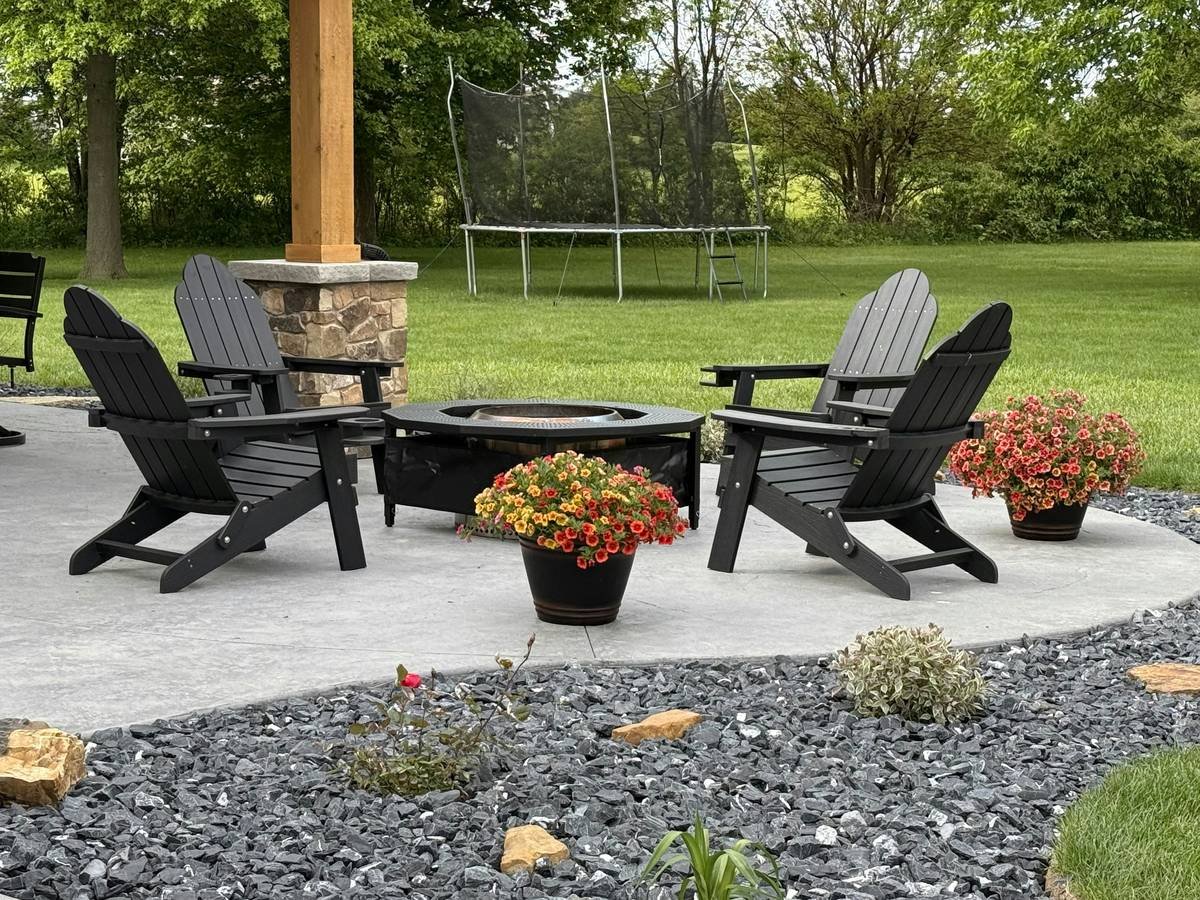
- Terrace Hack: On concrete patios, add a circular rug (rated for outdoors) to define the zone—but keep it outside the 36-inch safety radius.
And here’s a terrible tip I’ve heard too often: “Just spray your chairs with flame retardant!” Don’t. Most consumer sprays wear off in weeks and offer zero real protection. Stick to inherently non-flammable materials instead.
Real-World Examples of Successful Setups
In a 2023 case study by the American Society of Landscape Architects, a Portland homeowner transformed a neglected backyard corner by installing a 42-inch steel fire bowl surrounded by modular sectional seating with powder-coated aluminum frames. By storing cushions in a nearby bench (learn more about our team’s design philosophy), they achieved year-round usability. After two fire seasons, zero replacements were needed—proving that upfront investment pays off. Contrast that with my neighbor’s bargain-bin resin set, which cracked after one summer. Moral? Durability trumps discount pricing every time.
Frequently Asked Questions
What’s the safest distance between fire pit and furniture?
Maintain at least 36 inches of clearance between the flame edge and any seating surface. This minimizes radiant heat exposure and reduces ignition risk, per Consumer Product Safety Commission recommendations.
Can I use regular patio furniture around a fire pit?
Only if it’s labeled “heat-resistant” or made of metal/stone. Standard wicker, plastic, or fabric-covered frames degrade quickly and pose fire hazards.
How do I store fire pit furniture during winter?
Disassemble if possible, clean thoroughly, and store in a dry garage or shed. For fixed pieces, use breathable, waterproof covers—not plastic tarps, which trap moisture.
Are built-in benches better than movable chairs?
Built-ins save space and look seamless but lack flexibility. Movable chairs allow reconfiguration for larger groups. Choose based on your typical guest count and layout needs.
Does building a fire pit area increase home value?
Yes—outdoor living spaces can boost resale value by up to 12%, according to a National Association of Realtors report. A thoughtfully designed fire zone is a strong selling point.
Where can I get personalized advice?
If you’re unsure about materials or layout, contact us for a free consultation. And rest assured—your data stays secure, as detailed in our Privacy Policy.
Building a fire pit area isn’t just about stacking stones and tossing out chairs. It’s about crafting a sanctuary where stories unfold, s’mores disappear, and cold nights feel warm. Do it right once, and you’ll never scramble for a seat again. Now go light that fire—you’ve earned it.