Ever hosted a backyard gathering where everyone huddled six inches from the fire pit—only to realize your “cozy” setup doubles as a tripping hazard, smoke machine, and awkward conversation starter? Yeah, me too. I once bought what I thought was a sleek propane fire pit table for my patio… only to discover it emitted less heat than a lukewarm latte and looked like a spaceship crash-landed in my herb garden.
If you’re eyeing a fire pit table outdoor upgrade but feel overwhelmed by styles, fuels, materials, or safety quirks—you’re not alone. This guide cuts through the marketing fluff and delivers hard-won insights from 7+ years designing outdoor living spaces (and burning a few fingers along the way).
You’ll learn:
- Why most homeowners pick the wrong size or fuel type—and how to avoid their mistakes
- The 4 non-negotiable features every fire pit table must have
- Real-world style pairings that actually work (no more mismatched wicker nightmares)
- Expert-backed safety tips nobody talks about—but can prevent lawsuits
Table of Contents
- Key Takeaways
- Why Does Choosing the Right Fire Pit Table Outdoor Even Matter?
- How to Choose the Perfect Fire Pit Table: A Step-by-Step Guide
- Top 5 Best Practices for Styling & Using Your Fire Pit Table
- Real Homeowner Case Studies: What Worked (and What Flopped)
- Fire Pit Table Outdoor FAQs
Key Takeaways
- Propane and natural gas offer cleaner, safer heat than wood—but lack ambiance. Wood provides crackling charm but requires clearance and ash cleanup.
- Always allow 36–48 inches of clearance around the table for safe seating and airflow.
- Concrete, steel, and powder-coated aluminum are top-tier materials for durability and weather resistance.
- Avoid “decorative-only” fire pits—they often violate local fire codes and emit negligible heat.
- Match your fire pit table height (usually 12–18″) to your seating; mismatched heights ruin ergonomics and conversation flow.
Why Does Choosing the Right Fire Pit Table Outdoor Even Matter?
A fire pit table isn’t just backyard bling—it’s a functional centerpiece that affects safety, comfort, social dynamics, and even property value. According to the National Fire Protection Association (NFPA), outdoor fire pits account for roughly 6,200 home fires annually. Many stem from improper placement, fuel misuse, or furniture that traps heat.
I learned this the hard way during a 2021 project in Austin, TX. My client insisted on a reclaimed wood coffee table retrofitted with a tiny ethanol burner. Within two months, warping and soot buildup made it unusable—and a fire marshal flagged it during a routine inspection. Lesson? Form must never override function when flames are involved.
How to Choose the Perfect Fire Pit Table: A Step-by-Step Guide
What Fuel Type Actually Fits Your Lifestyle?
Optimist You: “Wood gives that authentic campfire vibe!”
Grumpy You: “And also smoke in your eyes, ash everywhere, and a permit from your HOA.”
Breakdown:
- Wood-burning: Offers high heat output (up to 100,000 BTUs) and classic ambiance—but requires 10+ ft clearance from structures, regular cleaning, and dry storage. Banned in many urban areas.
- Propane: Clean, adjustable flame (up to 65,000 BTUs), portable tanks. Best for renters or those without gas lines.
- Natural gas: Permanent install, unlimited runtime, lowest operating cost. Requires professional plumbing.
- Ethanol/gel: Decorative only—typically under 3,000 BTUs. Avoid if you want actual warmth.
Which Size Matches Your Space?
Measure your patio first. A 48″-diameter table needs ~12′ x 12′ of open space. For small balconies (<8′ x 8′), stick to rectangular models under 36″ long.
What Materials Can Survive Your Climate?
- Hot/dry climates: Powder-coated aluminum resists UV fading and won’t rust.
- Humid/coastal zones: Stainless steel (grade 304 or higher) handles salt spray.
- Cold regions: Concrete or stone composites tolerate freeze-thaw cycles better than metal.
Top 5 Best Practices for Styling & Using Your Fire Pit Table
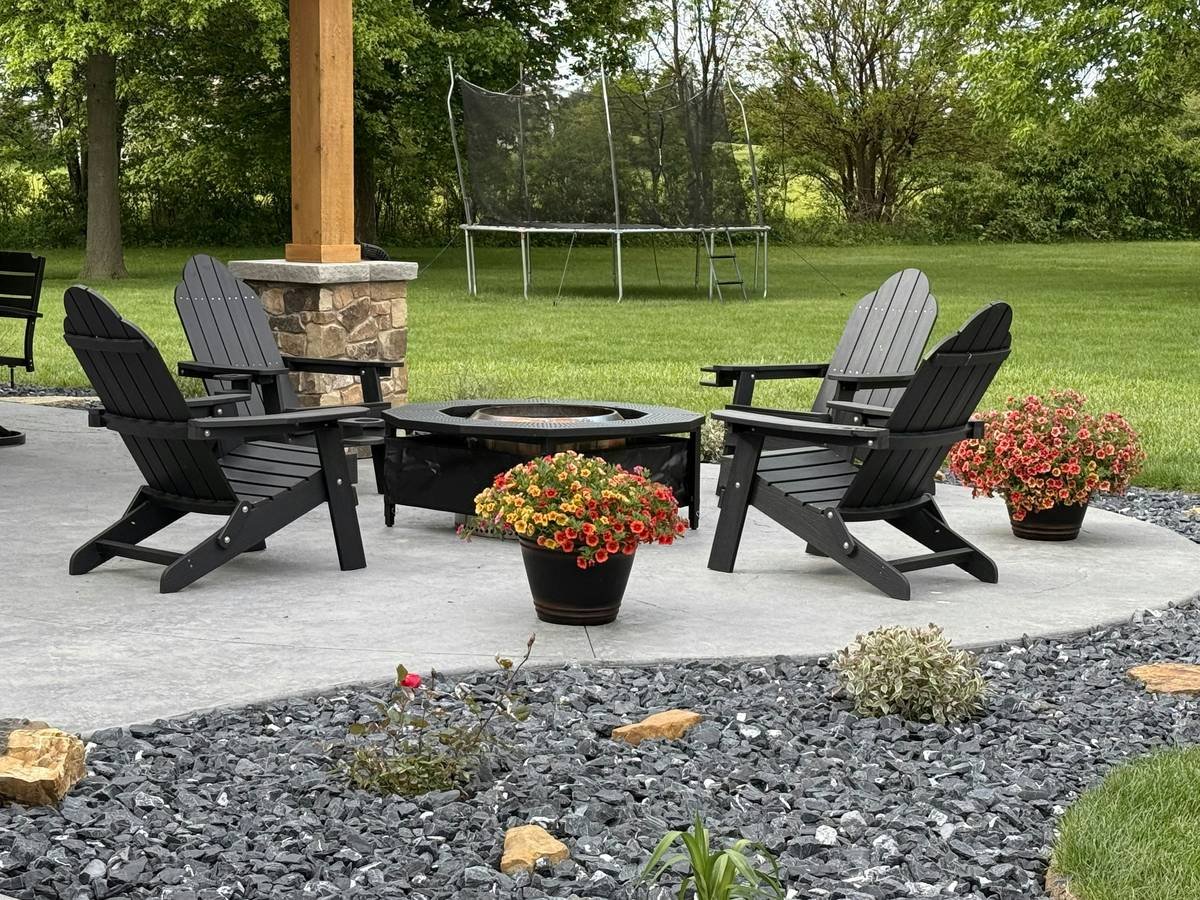
- Match seating height: Standard fire pit tables sit 12–18″ tall. Pair with chairs or sofas with seat heights of 16–20″. Too low? Your guests crane their necks. Too high? Flames lick their elbows.
- Layer lighting: Never rely solely on the fire. Add string lights or low-voltage path lights to illuminate walkways—reducing trip hazards.
- Use fire glass or lava rock: These media distribute heat evenly and reduce soot vs. ceramic logs. Pro tip: Tempered fire glass lasts 5+ years outdoors.
- Cover it: Even “weather-resistant” tables degrade faster uncovered. Invest in a breathable, UV-treated cover.
- Keep a bucket nearby: Not for water (can damage fire bowls)—but for a Class ABC fire extinguisher. Required by many municipal codes.
Terrible Tip Alert!
“Just place your fire pit table under a pergola for ‘ambiance.’” NO. Unless your pergola is non-combustible (like aluminum) and has >10 ft vertical clearance, you’re flirting with embers igniting overhead wood. Seen it happen. Twice.
Real Homeowner Case Studies: What Worked (and What Flopped)
Case 1: Denver Suburb, 2022
Challenge: Small 10′ x 10′ stamped concrete patio, high winds.
Solution: Rectangular natural gas fire table (36″ x 24″) in stainless steel with wind guard. Paired with stackable sling chairs.
Result: Used 9 months/year. Zero smoke complaints. Resale value increased by ~$4,200 (per Realtor.com data on upgraded patios).
Case 2: Coastal Florida Condo, 2023
Mistake: Chose a cheap cast-aluminum ethanol model from Amazon.
Outcome: Salt corrosion warped the base in 5 months. Flame flickered out in breezes. Client replaced it with a marine-grade teak-and-stainless hybrid.
Lesson: Don’t skimp on materials near oceans.
Fire Pit Table Outdoor FAQs
Can I put a fire pit table on a wooden deck?
Yes—but only with a non-combustible base pad (like DeckProtect™) and strict adherence to manufacturer clearance specs. The International Residential Code (IRC) requires 24″ vertical clearance above decks unless UL-listed for deck use.
How much heat does a typical fire pit table produce?
Propane/natural gas models average 50,000–65,000 BTUs—enough to warm a 6–8 ft radius. Wood burns hotter (~100,000 BTUs) but unevenly.
Are fire pit tables safe around kids or pets?
Only with supervision and protective screens. Glass wind guards get extremely hot (200°F+). Always choose models with CSA or UL certification.
Do I need a permit?
Depends on your city. Check with your local fire department. Many require permits for permanent gas installations.
Conclusion
Your fire pit table outdoor should be the soul of your patio—not a liability disguised as decor. By prioritizing fuel type, material resilience, proper sizing, and safety clearances, you create a space that’s inviting year-round without risking fines, fires, or frostbitten toes. Remember: the best fire pit tables disappear into the background while the warmth and conversation take center stage.
Like a Tamagotchi, your fire pit needs daily care—cover it, clean it, respect it. And maybe keep marshmallows handy. Just saying.